CAPA Management: 7 Stages Every Manufacturer Should Follow
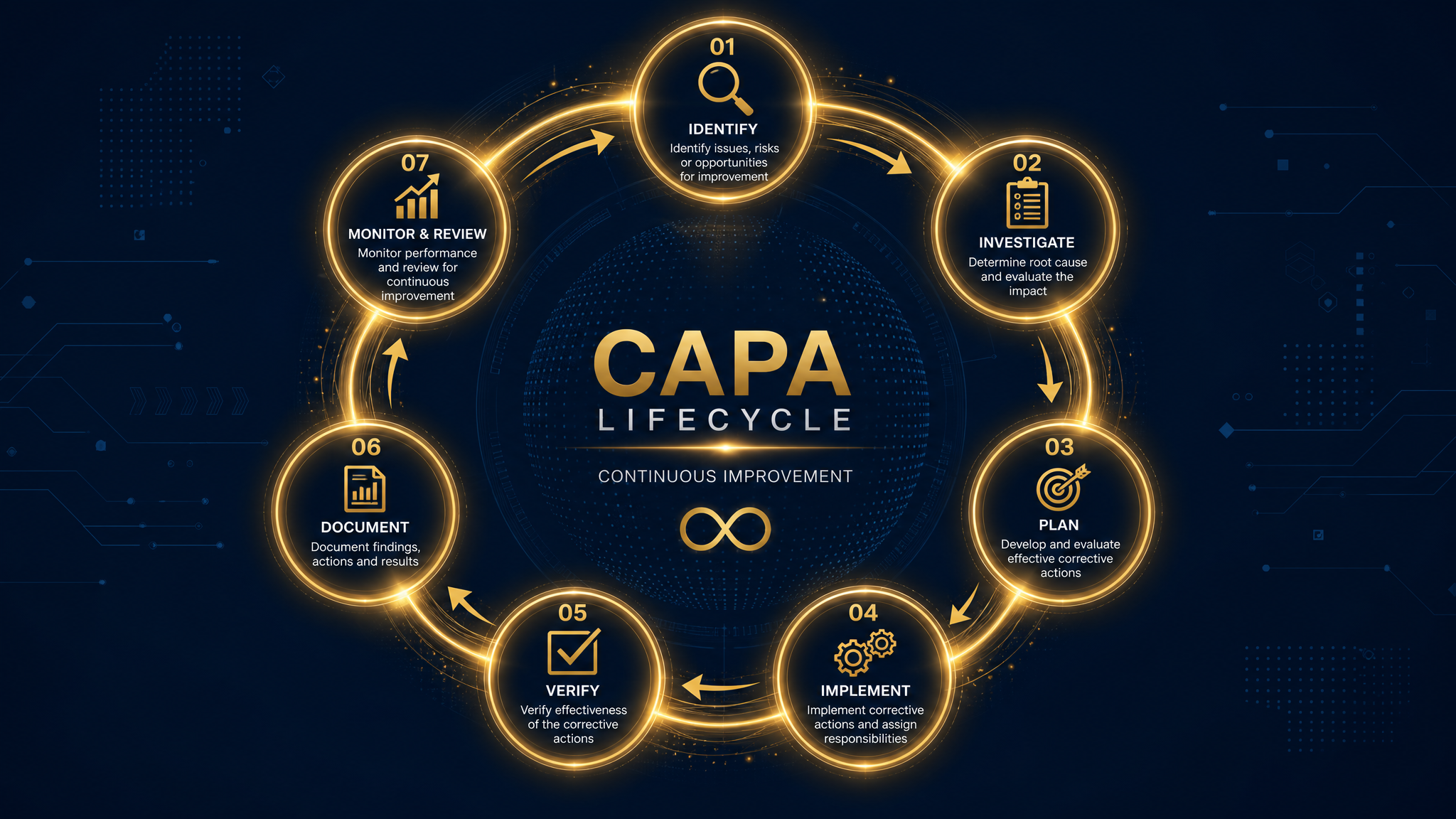
The 7-Stage CAPA Lifecycle
Corrective and Preventive Action (CAPA) is one of the most critical processes in any QMS. Yet many organizations treat it as a checkbox exercise rather than the powerful improvement tool it should be.
Stage 1: Identification
CAPAs can originate from multiple sources:
The key is having a systematic way to capture and categorize each trigger.
Stage 2: Containment
Before investigating root cause, implement immediate containment actions to prevent the issue from recurring or spreading. This might include quarantining product, adjusting processes, or notifying affected parties.
Stage 3: Root Cause Analysis
This is where most CAPA programs fail. Common techniques include:
Stage 4: Corrective Action Planning
Design specific, measurable actions that address the root cause — not just the symptom. Each action should have an owner, a due date, and clear acceptance criteria.
Stage 5: Implementation
Execute the planned actions, documenting evidence of completion. This includes updating procedures, training personnel, modifying equipment, or changing suppliers.
Stage 6: Verification
Confirm that the corrective actions were implemented as planned and that they actually resolved the original issue. This step requires objective evidence.
Stage 7: Effectiveness Review
After a defined period (typically 60–90 days), review whether the corrective actions have been sustained and the problem hasn't recurred. This is the step most organizations skip — and it's the most important one.
Tracking It All
Managing CAPAs across spreadsheets is a recipe for missed deadlines and lost data. ExceleorQMS provides a complete CAPA lifecycle tracker with automated reminders, status workflows, and effectiveness review scheduling.
See ExceleorQMS in Action
Experience how our platform automates compliance workflows, tracks CAPAs, and keeps you audit-ready — every day.