Digital Training Matrix: Stop Tracking Employee Competency on Paper
Why Paper-Based Training Records Fail Audits
ISO 9001 Clause 7.2 requires organizations to determine necessary competence, ensure personnel are competent, and retain documented information as evidence. It sounds straightforward — until you're three days before an audit and can't locate the training records for a critical operator.
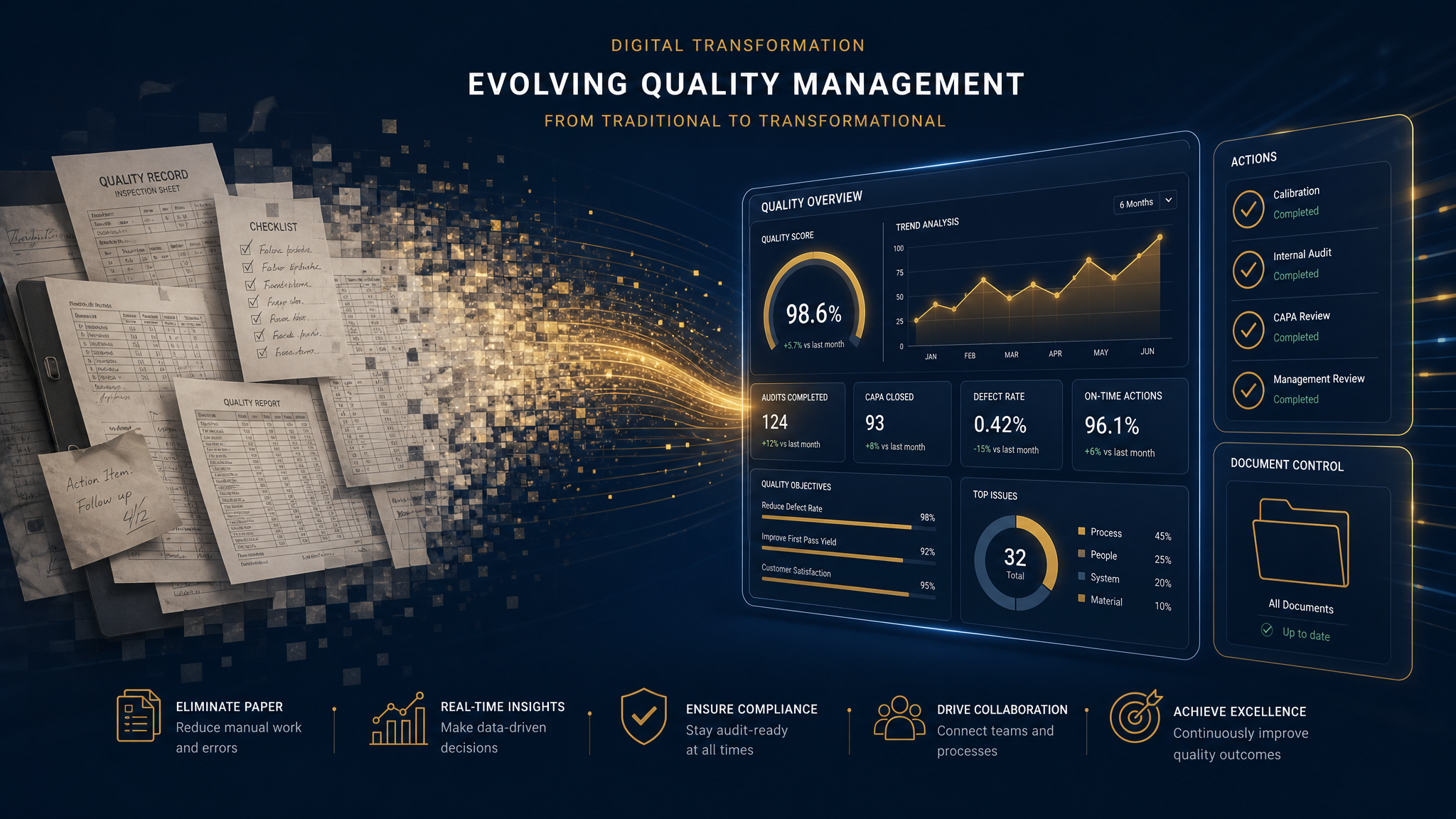
Paper binders, scattered spreadsheets, and email-based training sign-offs create a compliance liability that grows with every new hire and every procedure update.
The Training Matrix: Your Single Source of Truth
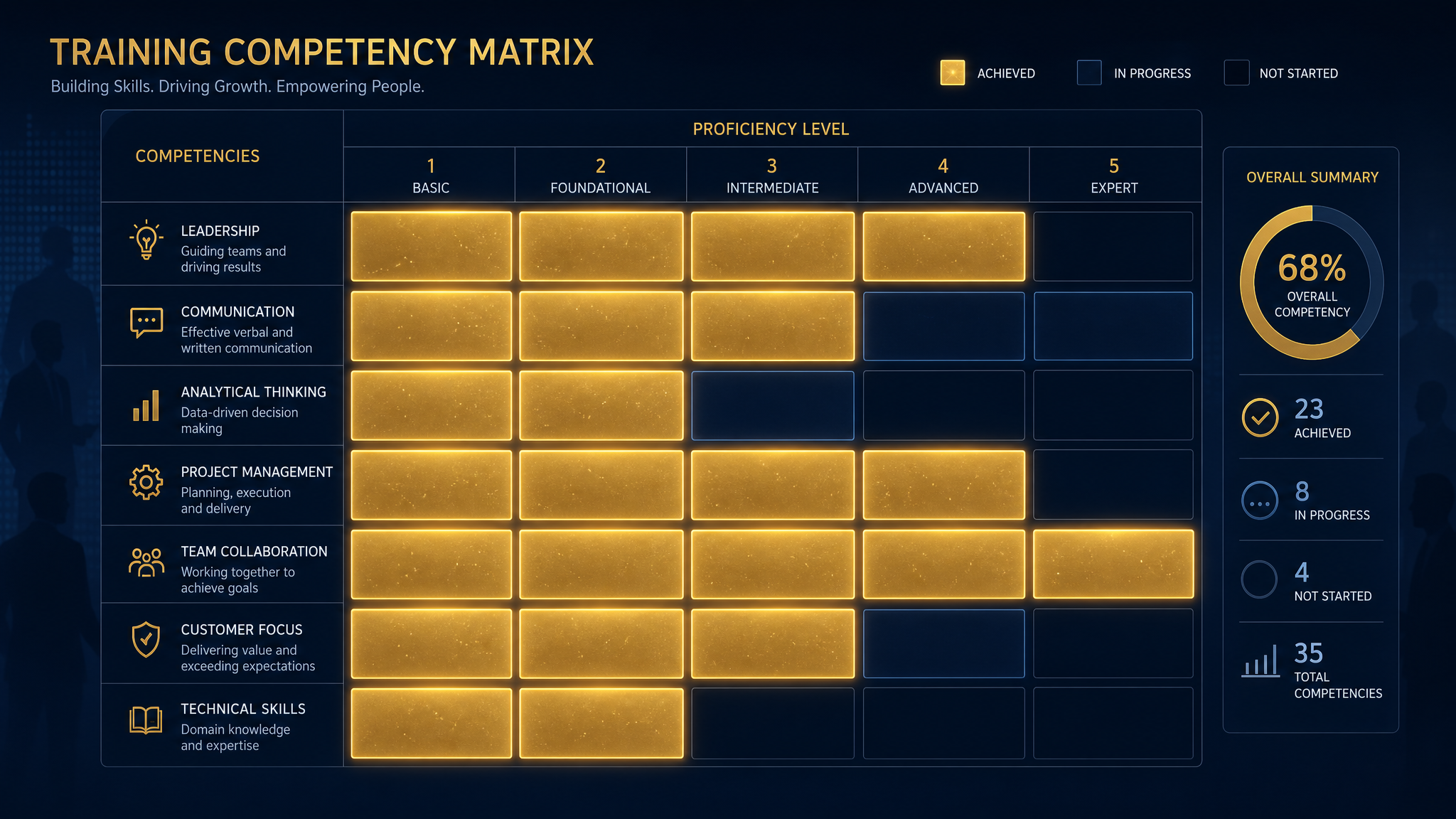
A training matrix maps every role in your organization to the competencies required to perform that role. In its digital form, it becomes a living document that:
Building an Effective Training Matrix
Step 1: Define Roles and Competencies
Start by listing every role that affects product or service quality. For each role, identify the specific competencies required — not just job titles, but demonstrable skills and knowledge areas.
Step 2: Establish Training Methods
Not all competency is gained through formal training. ISO recognizes four pathways: education, training, experience, and skills. Your matrix should capture all four.
Step 3: Set Frequency and Expiration
Some training is one-time (initial orientation), while other competencies require periodic refresher training (annual safety updates, regulatory changes). Your system needs to track both.
Step 4: Document Evidence
For each completed training event, you need evidence: certificates, sign-off sheets, assessment results, or on-the-job evaluation records. Digital systems store these attachments alongside the training record.
Common Audit Findings in Training Records
From years of audit experience, the most frequent training-related findings are:
How ExceleorQMS Solves Training Management
Our training management module provides:
Stop managing training records in binders. Start managing competency with purpose-built software that grows with your organization.
See ExceleorQMS in Action
Experience how our platform automates compliance workflows, tracks CAPAs, and keeps you audit-ready — every day.