Supplier Quality Management Software: From Approved Vendor Lists to Risk-Based Monitoring
The Supplier Quality Challenge
ISO 9001 Clause 8.4 is unequivocal: organizations must evaluate, select, monitor, and re-evaluate external providers based on their ability to provide conforming products and services. Yet for many manufacturers, supplier quality management remains one of the least mature processes in their QMS.
The consequences are severe. A single supplier quality failure can trigger customer complaints, product recalls, regulatory action, and lost contracts. And when the auditor asks how you monitor supplier performance, "we haven't had any problems" is not an acceptable answer.
Beyond the Approved Vendor List
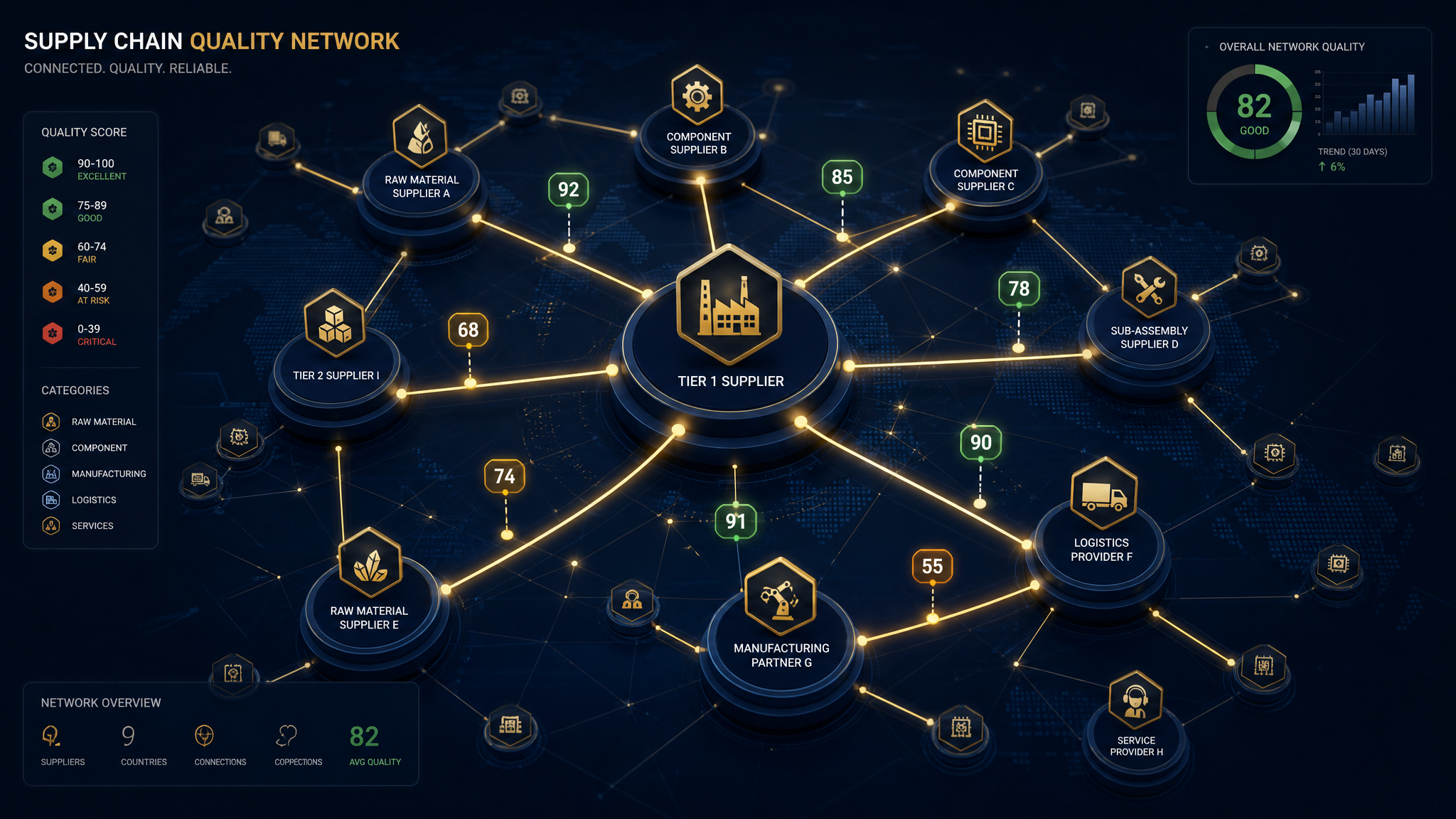
An Approved Vendor List (AVL) is the starting point, not the destination. Effective supplier quality management encompasses five interconnected processes:
1. Initial Evaluation and Qualification
Before adding a supplier to your AVL, assess their capability through questionnaires, on-site audits, sample testing, and quality system certification verification. Score each supplier against defined criteria and document the approval decision.
2. Risk-Based Classification
Not all suppliers carry equal risk. A fastener supplier and a critical raw material supplier shouldn't receive the same level of oversight. Classify suppliers by risk level based on:
3. Performance Monitoring
Track key performance indicators (KPIs) for each supplier:
4. Periodic Re-evaluation
Schedule formal re-evaluations based on risk classification. High-risk suppliers might be re-evaluated quarterly; low-risk suppliers annually. Use performance data to drive re-evaluation decisions, not just calendar dates.
5. Supplier Development and Corrective Action
When performance slips, you need a formal process for issuing supplier corrective action requests (SCARs), tracking responses, and verifying effectiveness. The best supplier relationships are partnerships where both parties invest in continuous improvement.
What Auditors Expect to See
During a surveillance or certification audit, expect questions about:
How ExceleorQMS Transforms Supplier Management
Our supplier quality module centralizes the entire supplier lifecycle:
Your supply chain quality is only as strong as your ability to measure and manage it. Stop relying on tribal knowledge and start building a data-driven supplier quality program.
See ExceleorQMS in Action
Experience how our platform automates compliance workflows, tracks CAPAs, and keeps you audit-ready — every day.